Screw anchors for marine moorings. In the Seabed. Not On It.
Turned into the seabed from a work boat and loaded the same day, with every anchor’s installation torque recorded. A replacement for concrete blocks and dragged steel anchors.
15+
Years in aquaculture
Farming and anchoring
500+
Anchors installed
Farms, marinas and docks
0 (zero)
Seabed Spoil
No excavation, no dredging: nothing is dug out
0 (zero) days
Concrete Curing Days
Loaded the day it goes in
What it is
Held by the soil, not by its weight.
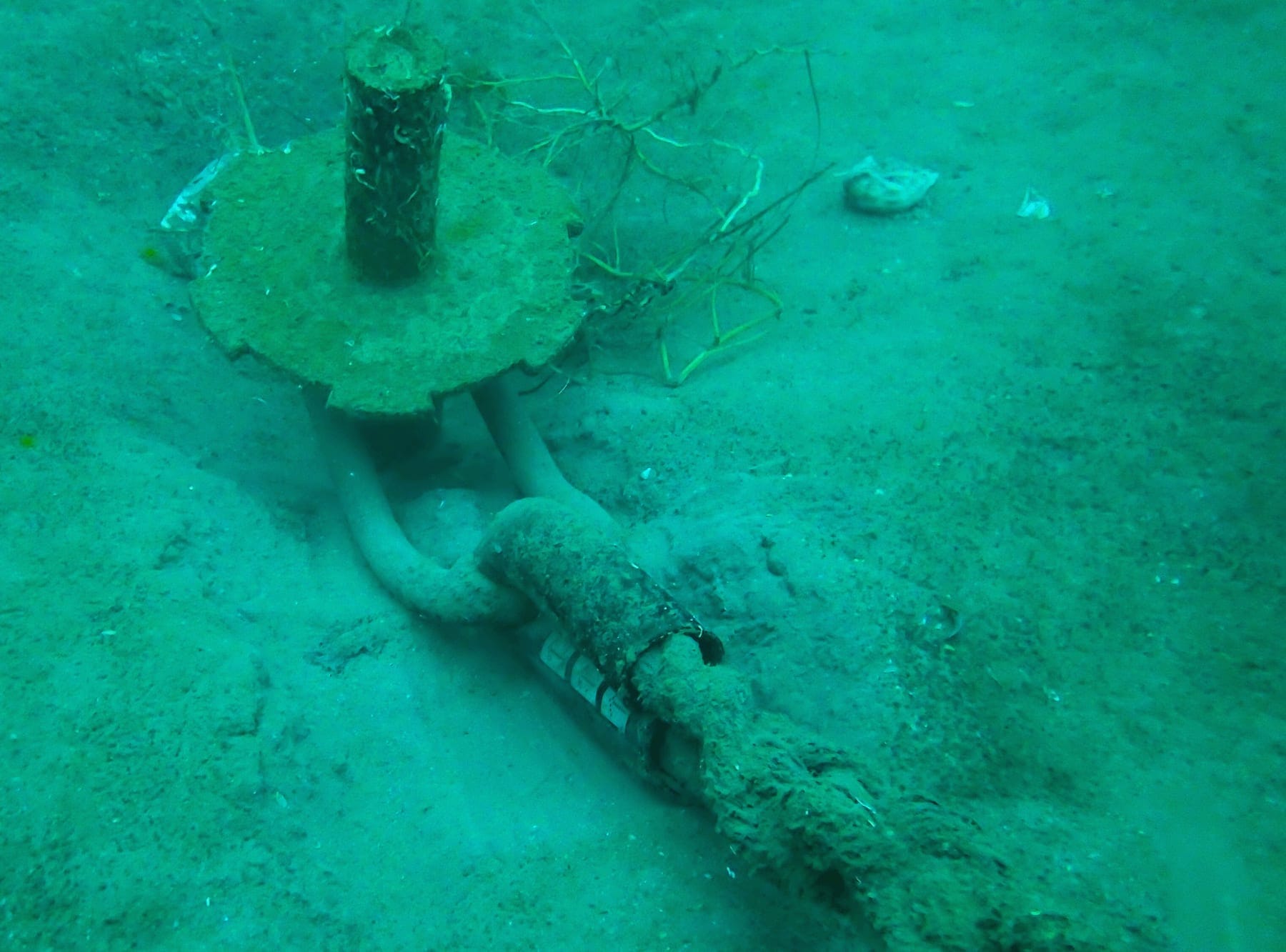
A screw anchor, also called a helical anchor, is a galvanized steel shaft with helical plates, turned into the seabed by a hydraulic motor from a work boat. It holds by the soil above its plates, so it takes an upward pull, needs a much shorter line than a concrete block mooring (about 2:1 scope instead of 5:1), leaves nothing on the bottom to drag, and takes load the day it goes in. The installation torque of every anchor is recorded and converted to a calculated capacity.
Concrete block
By its weight in water and its friction on the seabed.
Upward pull: Resisted only up to its weight in water.
Steel drag anchor
It is dragged along the bottom until its fluke, the blade at its tip, digs in.
Upward pull: Holds best when the pull is near-horizontal. An upward pull can break it out.
Screw anchor
It is screwed to a set depth, where its helical plates bear against the soil.
Upward pull: Resisted by the soil above its plates, so the line can meet it at an angle.
Full comparison: blocks, steel anchors, screw anchors
One company designs and installs every anchor: MusselPro designs, Moorix installs. About us
Precision anchoring across every marine application.
Each sector has its own load profile, regulatory pathway, and install window. Pick the one closest to your project.
Aquaculture
Screw anchors that hold long-line, raft and cage systems steady through storm cycles, with no block or ground chain lying on the seabed.
- Typical application
- Mussel & oyster long-line farms
- Mooring legs
- About a third as long (2:1 scope)
Marinas & Harbors
Each mooring holds as a fixed point: no ground chain scouring the seabed, a tighter swing circle, and more boats in the same licensed water.
- Typical application
- Conservation moorings
- Swing circle
- Tighter, on a shorter line
Commercial Marine
Piles screwed in at near-zero vibration beside live structures, with a recorded torque and calculated capacity for every pile.
- Typical application
- Seawall stabilization
- Vibration
- Near zero, no hammer
It isn’t dropped. It’s turned in.
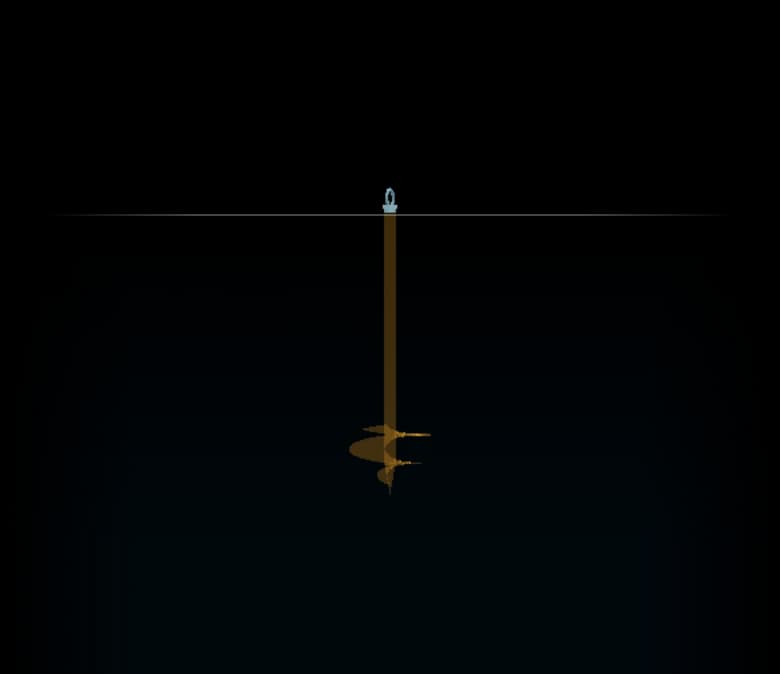
The shaft advances under hydraulic torque while the helix plate threads down into soil that storms never reach. No excavation, and no spoil left on the seabed — the cloud around the shaft is sediment displaced as the anchor passes, not material removed. Even the brittle star beside the shaft stays where it was. The disturbance stays at the shaft.
The helix is out of sight. Its capacity isn’t.
A screw anchor resists being turned in the way the soil will resist it being pulled out. Record the torque, apply the factor for that shaft and soil, and holding capacity becomes an estimate made on the day, from a torque measured on that anchor, not a figure assumed afterwards.
Q ult equals K t times T: ultimate holding capacity equals the torque correlation factor times the installation torque.
- Ultimate holding capacity
- What the anchor will hold, in kN (about 10 kN to the tonne).
- Torque correlation factor
- A published factor, set mainly by the shaft size.
- Installation torque
- Measured on site as the anchor is turned in.
The part that holds is the part you never see. Let’s specify it for your site.
Send the site: water depth, seabed type and what the mooring has to hold. An engineer replies within 24 hours with questions and a first read; the full proposal follows within two business days.